
Reflections from the Mary Seacole Trust’s inaugural International Nurses Day webinar 11/5/2026
| Leadership is not confined to a title. It is expressed through courage, compassion, service and the willingness to act. |
On 11 May 2026, the Mary Seacole Trust hosted its inaugural International Nurses Day webinar. The event brought together nursing leaders and colleagues from across the profession to celebrate the contribution of nurses and reflect on the 2026 theme:
| “Our Nurses. Our Future. Empowered Nurses Save Lives” |
The theme felt especially relevant to the Trust. Mary Seacole’s life reminds us that empowered nursing is not a new idea. Her courage, resourcefulness and determination continue to offer a powerful example of what nurses can achieve when they are guided by purpose and refuse to be limited by rejection or exclusion.
Setting the scene: leadership, compassion and courage
The webinar was hosted by newly appointed Mary Seacole Trust Trustee Jeni Caguioa MBE. She welcomed participants and framed the event as both a celebration of nursing and an opportunity to reflect on the profession’s wider influence on people, communities, patient outcomes and healthcare systems.
Throughout the session, Jeni connected the speakers’ experiences to the shared values of leadership, equity, global health, empowerment and professional development. She also encouraged participants to learn more about the Trust’s work and to become involved in preserving and promoting awareness of Mary Seacole’s life, achievements and enduring relevance.
Following in Mary Seacole’s footsteps
Opening remarks were delivered by Mary Seacole Trust Chair Felicia Kwaku OBE. She reflected on Mary Seacole’s importance as a role model, particularly for nurses from Black and minoritised communities, and described nursing as a powerful force for humanity, social justice and effective healthcare.
Felicia also shared a personal reflection from her travels to Panama in January of this year, where she visited locations connected with Mary Seacole’s life. Following part of Mary’s journey brought home the geographical reach of her story and the significance of a legacy that extends far beyond its most familiar chapters.
Mary crossed cultural, social and geographical boundaries to serve others. Her example calls on today’s nurses to lead with inclusion, dignity, resilience and strong professional values, while continuing to strengthen the nursing voice.
Voices from the webinar
|
Dr Joan Myers OBE Joan Myers Consultancy Ltd |

Margaret Baron Caturday Resuscitation Officer |

Wendy Irwin Head of Equality and Diversity, RCN |

Empowerment begins with knowing your value
Dr Joan Myers OBE explored Mary Seacole’s life as an example of empowered leadership in action. Mary was not defined by the barriers or rejection she experienced. She was guided by a strong sense of identity, value and purpose.
After being rejected when she attempted to join official nursing efforts during the Crimean War, Mary did not abandon her mission. She created her own path, travelled independently and established support close to the battlefield, where she cared directly for wounded soldiers.
| Where might we be waiting for permission when we already have the purpose, knowledge and ability to act? |
Joan encouraged nurses to view obstacles and rejection not simply as failure, but sometimes as redirection. Empowerment, she explained, is not about having power over others. It is about using our influence, experience and position to support people, improve services and create opportunities for those who follow.
Her contribution also highlighted the responsibility of organisations. Nurses are better able to innovate, raise concerns and lead improvement when they feel psychologically safe, respected and valued. This means listening to nursing voices, recognising expertise, supporting development, delegating meaningfully and celebrating achievement.
Global health is service beyond borders
Margaret Baron Catuday, a Resuscitation Officer at Cambridge University NHS Foundation Trust, reflected on nursing as a form of service that reaches beyond organisations, job titles and national borders.
Drawing on her work in the Philippines, she described finding significant challenges in emergency care at a provincial hospital in Samar. These included inadequately stocked resuscitation equipment, emergency medicines being stored separately from resuscitation trolleys and staff lacking confidence in using defibrillators because they had not received formal training.
Rather than seeing this as an opportunity for a one-off intervention, she recognised the need for a longer-term commitment centered on capability and sustainability. Her response focused on practical, low-cost training, sharing knowledge and building the confidence of nurses, pharmacists, support staff and ambulance personnel.
Her later work linked to a critical care collaboration in Uganda reinforced the value of a train-the-trainer approach. Combining virtual learning with face-to-face mentoring helped local educators to develop not only clinical knowledge, but also teaching, simulation, leadership and learner-support skills.
A particularly powerful message concerned psychological safety. Adults learn best when they can ask questions, participate openly and make mistakes without fear or humiliation. Empowering education therefore requires more than transferring knowledge. It requires a respectful environment in which people can learn, practice and grow in confidence.
Margaret also reminded participants that global health principles are relevant within the NHS. Cultural awareness, adaptability and inclusive education can strengthen practice in every setting.
Having the courage to say, “I need more”
Wendy Irwin, Head of Equality and Diversity at the Royal College of Nursing, challenged participants to consider whether the nursing profession receives the visibility, recognition and support it deserves.
| Give yourself permission to recognise when you need more. |
This might mean more support, greater recognition, better development opportunities, improved wellbeing or the confidence to have a courageous conversation. Acknowledging that something needs to change is not a sign of weakness. It can be an act of leadership and self-advocacy.
Wendy introduced an “I Can Do” approach to leadership. Her contribution emphasised that leadership already exists throughout nursing and is not restricted to people holding formal management positions. Everyday nursing leadership includes:
- making nursing work visible
- connecting and communicating across differences
- using personal agency
- balancing empathy with accountability
- addressing distrust and distress
- developing personal mastery
- taking ownership of achievements and outcomes
She also encouraged participants to pause and consider what they might need to release, change or hand over. Nurses frequently carry professional responsibilities and expectations that can obscure their own voices. Reflection can help us reconnect with our purpose, protect our wellbeing and speak with greater confidence.
Developing the next generation of nurse leaders
The webinar also acknowledged Nang-Tege, a recent graduate of the 2025 to 2026 Mary Seacole leadership programme. This reflected the Trust’s continuing commitment to supporting nurses through education, scholarship and leadership development.
Scholarships and development opportunities are not only investments in individuals. They help strengthen the wider profession by creating confident leaders who can influence services, support colleagues and carry Mary Seacole’s values into new settings and communities.
A connected nursing community
As the webinar drew to a close, Felicia Kwaku OBE recognised members of the Trust’s wider nursing community and reflected on the importance of networks, mentorship, scholarship and collective support.
The event demonstrated that empowerment is rarely achieved alone. It grows through relationships, encouragement, learning and the willingness to make space for other people. When nurses feel trusted and connected, they are better able to contribute ideas, lead change and improve care.
The Trust hopes to build on this inaugural event by encouraging continued participation in activities that advance Mary Seacole’s legacy and strengthen connections across the nursing community.
Our reflections
| • | Know your value Mary Seacole did not allow rejection to determine her worth or silence her purpose. Nurses should recognise the knowledge, insight and leadership they already possess. |
| • | Choose purposeful action Leadership often begins when someone decides not to wait for permission but instead takes a thoughtful and courageous step towards improvement. |
| • | Create safety so that people can learn Psychological safety allows people to ask questions, suggest ideas, acknowledge mistakes and grow. It is essential in both clinical practice and professional education. |
| • | Empowerment should benefit others True empowerment is not solely about personal advancement. It is about using influence to improve care, support colleagues and create opportunities for others. |
| • | Protect your own voice and wellbeing Nurses cannot continue to give without reflection, support and renewal. Recognising what we need, and communicating it clearly, is part of responsible leadership. |
| • | Think about the legacy you are creating Mary Seacole’s impact endured because her actions changed lives. Every nurse can leave a legacy through compassionate care, advocacy, mentorship, education and service. |
Continuing Mary Seacole’s legacy
International Nurses Day provides an opportunity to celebrate nurses, but the work of recognising and empowering the profession must continue throughout the year.
Mary Seacole showed what is possible when skill, compassion, courage and determination are brought together. Her example asks each of us to consider:
| What will I do with my knowledge, my influence and my opportunity to serve? |
The answer may be found in a courageous conversation, a new idea, an act of mentorship, a commitment to learning or a decision to make someone else’s contribution visible.
Empowered nurses save lives. They also develop people, strengthen communities, challenge inequality and create lasting change.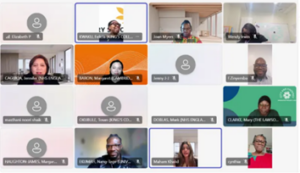
The Mary Seacole Trust thanks all the speakers, participants and supporters who contributed to this inaugural webinar and helped make it a meaningful celebration of nursing leadership, service and legacy.
| KEEP CONNECTED WITH THE MARY SEACOLE TRUST
Follow the Trust’s work, take part in future events, and help preserve and promote Mary Seacole’s legacy through education, leadership, community engagement and service. |