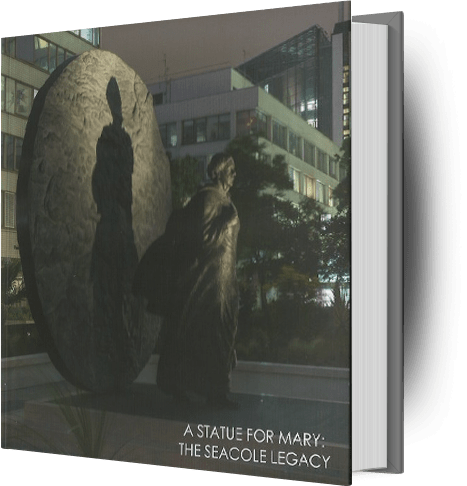

Over 100 people from the worlds of politics, healthcare, nursing and the military gathered in the grounds of St Thomas’ Hospital, Westminster on Tuesday 30 June to mark 10 years since the unveiling of the statue of Victorian icon Mary Seacole, the first statue to a named black woman in the UK.
The wreath laying service at St Thomas’ was followed later in the day by a service of commemoration at the St Charles Borromeo Church in Westminster, London.
Since the unveiling on 30 June 2016, the statue has become an important London landmark, visited regularly by tourists from all over Britain and the rest of the world. The statue of the Jamaican/Scottish nurse is loved by staff and patients at the NHS Trust and stands in tribute to Mary’s courage and determination.
Addressing the gathering at the statue, MST Chair Felicia Kwaku, said: “As you will hear today, Mary means so much to so many people, and it is a good time to remind ourselves that this statue is here because of the many donations from hundreds of individuals as well as organisations large and small who came together to make this happen.
“We are grateful to nurses and other healthcare workers both at home and abroad, colleagues in the military, community organisations, politicians and others who saw the need for a statue of Mary to help express the kind of society that we strive to become. That message was important ten years ago, as it was in the 19th century when Mary made her way to the Crimea. It may be even more important today.
“We the Mary Seacole Trust look after the statue, but we are also committed to sharing Mary’s story far and wide in our work to promote diversity and inclusivity. We are particularly proud of the connections that have been made with nurses in Mary’s birthplace, Jamaica where lasting friendships have been formed.”
Dame Amanda Pritchard, Chief Executive at Guy’s and St Thomas’ NHS Foundation Trust, said: “Mary Seacole’s memory endures, and she continues to inspire.” Dame Amanda described looking out of her office window, overlooking the statue, every day, and always seeing people there. And she stressed that the statue is representative of the diverse NHS workforce, “without whom the NHS would not exist”.
Sculptor Martin Jennings, whose daughter Caitlin now works as a nurse at St Thomas’, said he was proud that the statue has created “social good”. He said: “When I see a mother bring her daughter to stand next to the statue, it becomes something with meaning and purpose, inspiring young people, and I know it has become everything I hoped for the work.”
Dawn Butler MP, a supporter of the statue appeal who is currently campaigning to have the title ‘nurse’ protected in law, said: “The hallmark of Mary Seacole is caring. At 50 years old she went to help the soldiers in the Crimea. That is a true patriot to the UK.” She advised that when people ask about patriotism, “point to people like Mary who are faced with racism, but still keep going and giving to their country”.
Reverend Joyce Fletcher, a nurse and National Executive Director of women and family, Church of God of Prophecy, said: “Mary Seacole teaches us that change can happen when someone is willing to challenge barriers and not give up.”
Councillor Paul Valentine, newly elected Mayor of Lambeth, took the opportunity to thank NHS nurses who “embody the qualities of Mary Seacole every day”.
Speaking on behalf of the military, Colonel David Bates, an MST board member, described how Mary Seacole cared for soldiers in the Crimea both on the battlefield and at her British Hotel. “She charged the officers for everything that was served there, but it was free to ordinary soldiers.”
Wreaths and flowers were laid at the foot of the statue by:
Dawn Hill CBE, President, Mary Seacole Trust
Martin Jennings, Sculptor of the Statue
Dame Amanda Pritchard, Chief Executive Officer, Guy’s and St Thomas’ NHS Foundation Trust, and Professor Avey Bhatia, Chief Nurse, Guy’s and St Thomas’ NHS Foundation Trust
Trevor Sterling, former MST Chair, on behalf of Moore Barlow
Army representative Colonel David Bates
Bejoy Sebastian, President of the Royal College of Nursing
Mayor of Lambeth, Councillor Paul Valentine
Mary Seacole Memorial Association representative
Nurses Association of Jamaica UK representative
Caribbean Nurses and Midwives Association representative
Chief Nursing Officer and Chief Midwifery Officer’s Black Minority Ethnic Strategic Advisory Group
Representatives from Guy’s and St Thomas’ NHS Foundation Trust, including nursing and midwifery staff, attended the wreath laying at the statue. The event was also attended by senior NHS nurses, including Dame Ruth May, immediate past Chief Nursing Officer, NHS England who led on nursing during the Covid 19 Pandemic, and Chief Nurse for NHS London Karen Bonner
Present throughout the day were senior nurses and diaspora nursing associations.
The service at St Charles Borromeo was led by Father Oscar Ardila who reflected on the importance of faith and hope in Mary’s life and journey, his words touching all that were present. The service was attended by senior nurses and midwives from the NHS and wider public. Acosia Nyanin, Deputy Chief Nursing Officer, Professional and System Leadership, gave a vote of thanks on behalf of the Chief Nursing Officer for England Duncan Burton and the executive nursing team.
The service included a performance by the Black Living Donor Choir. The choir is made up of people who have donated a kidney as living donors, using their personal experience to raise awareness of kidney disease and living donations in the Black community.
At the end of the service, the Mary Seacole Trust signed the Armed Forces Covenant, led by MST Chair Felicia Kwaku, Lt Col Victoria Tannahill and Colonel David Bates.
More photographs of both events are available from: https://www.maryseacoletrust.org.uk/gallery/mary-seacole-tenth-anniversary-event/